five88w.io Europa League Roundup: Highlights and Reactions from Matchday
This week’s Europa League fixtures delivered a series of tightly contested matches where defensive discipline, rapid transitional play, and squad rotation dictated outcomes more than individual brilliance. Across the slate of midweek games, home sides struggled to convert early possession into decisive chances, while several visitors successfully neutralized attacking pressure and secured valuable away objectives. Aggregate balances shifted modestly, placing greater emphasis on second-leg strategy than on first-round dominance.
Latest Developments Across European Venues
The most immediate takeaway from the matchday is the recurring pattern of compact midfield blocks disrupting traditional wide-overload systems. Several managers deployed narrow formations that compressed central passing lanes, forcing opponents into low-percentage cross attempts. Goalkeeping units faced fewer high-volume shots but encountered tighter shooting angles, which elevated the importance of distribution accuracy under press. These structural adjustments suggest a tactical maturation within the competition, where teams are investing heavily in video analysis and opposition-specific game plans rather than relying on established identity play.
Tracking these micro-adjustments in real time has become essential for analysts and supporters alike. Platforms that aggregate live match data, tactical overlays, and verified post-match interviews enable quicker synthesis of evolving narratives. Many fans now cross-reference official broadcast insights with independent statistical feeds, including resources like five88, to verify claim accuracy before incorporating them into broader discussions about form trajectories and projection models.
Substitutions executed between the sixtieth and seventieth minutes frequently altered spatial control. Fresh legs introduced verticality that exposed fatigued fullbacks, while managed rest periods for starting centre-backs preserved defensive coordination. Managers who resisted late-game panic substitutions maintained shape integrity longer, allowing teams to secure narrow leads through positional retention rather than speculative counterattacks. These decisions reflect a growing willingness to prioritize control over expansion when the margin for error remains slim.
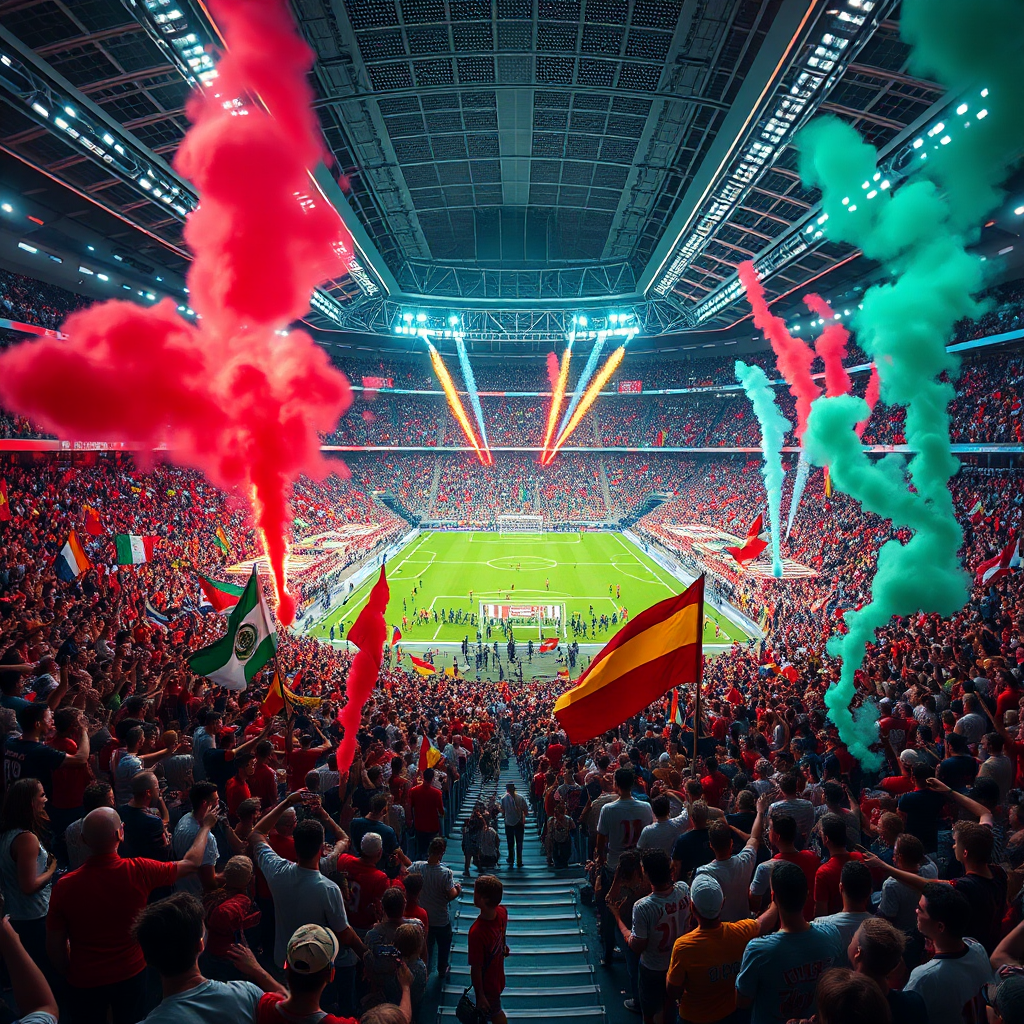
 Hình minh hoạ: five88
Context Behind the Week’s Results
To understand why certain outcomes aligned with prevailing trends, it helps to examine the broader framework governing current campaign phases. The Europa League operates on a dual-pillar model: domestic consistency and continental adaptability. Clubs that fail to balance league priorities with European scheduling often exhibit pronounced performance volatility, particularly during congested fixture windows. Travel distances, pitch dimensions, and local climate conditions introduce variables that cannot be fully standardized, yet they remain constant factors in weekly preparation cycles.
Historical data indicates that Europa League rounds frequently reward teams capable of executing controlled pressing rather than sustained high-intensity running. Unlike knockout competitions requiring outright breakthrough moments, midweek European ties often resolve through incremental advantages: superior set-piece execution, disciplined offside triggers, and efficient ball recovery sequences. When squads lack experience in managing these nuanced interactions, they surrender territorial initiative despite maintaining respectable possession percentages. Conversely, well-drilled units exploit momentary lapses in marking routines to generate low-risk scoring opportunities.
Financial structures also influence participation strategies. Broadcasting revenues, coefficient point accumulation, and qualification pathways determine how aggressively clubs commit resources to European campaigns. Organizations operating under sustainable budget parameters typically rotate personnel strategically, preserving core starters for championship races while utilizing fringe talents to test tactical variations. Smaller markets frequently leverage youth integration to offset resource limitations, creating unpredictable matchups that disrupt established scouting expectations.
Understanding these underlying mechanics clarifies why certain sides displayed remarkable composure while others fractured under similar pressure. Matchday performances rarely emerge in isolation; they reflect cumulative planning, injury recovery timelines, and administrative decisions made months prior to kickoff. Recognizing this continuum prevents oversimplified narratives and enables more accurate forecasting of subsequent encounters.

Detailed Developments and Tactical Adjustments
Midfield control remained the definitive separator across Tuesday and Wednesday fixtures. Teams employing a double pivot with staggered movement patterns consistently disrupted opponent build-up phases, intercepting passes into advanced zones and recycling possession through short diagonal exchanges. Opposition counters were mitigated by coordinated back-line shifts, where centre-backs synchronized jumps to cover space behind advancing wingers. This collective movement reduced isolated duels, transforming individual vulnerabilities into manageable structural gaps.
Wide areas witnessed contrasting approaches. Some managers instructed overlapping fullbacks to stretch defensive lines, creating room for inverted forwards to operate centrally. Others deployed ultra-defensive wide players tasked with denying inside cuts, effectively funneling attackers toward crowded penalty arcs. Both strategies yielded mixed returns, depending largely on finishing precision and goalkeeper positioning. Shots originating outside the eighteen-yard box generated minimal conversion rates, reinforcing the emphasis on progressive carrying versus speculative distribution.
Set-piece routines evolved beyond conventional height-based targeting. Quick throws, near-post flick-ons, and disguised corners forced defensive organizations to communicate continuously. Marking assignments shifted from zonal lock-downs to hybrid systems blending man-tracking with area coverage. Successful executions depended on rehearsed timing and spatial awareness, while failed attempts highlighted communication breakdowns during chaotic entries into the box. Coaching staffs increasingly treat dead-ball situations as primary scoring avenues rather than supplementary options.
| Metric Category | Observed Trend | Strategic Implication |
| style=”border-collapse:collapse;width:100%;border:1px solid #ddd;” |
|
|
|
|
Coaching adjustments between halves demonstrated varying degrees of risk tolerance. Several managers opted for formation symmetry corrections, shifting from asymmetrical width distributions to balanced spacing that simplified decision-making for central operators. Others accepted temporary positional imbalances to preserve energy reserves, trusting secondary attackers to compensate during extended phases of possession. Neither approach guarantees superiority, but both reflect calculated trade-offs tailored to specific match states.
Injury management continued to dictate substitution logic. Pre-existing muscle tightness, minor contact knocks, and accumulated mileage prompted cautious replacement protocols. Medical staff coordination with technical departments ensures that returning players enter prepared environments rather than abrupt competitive settings. This operational transparency reduces relapse risks while maintaining squad reliability throughout extended campaigns.

Related Reactions From Clubs and Supporters
Post-match commentary revealed a spectrum of responses ranging from measured satisfaction to urgent reconsideration. Head coaches emphasized process improvement over result validation, acknowledging that sustained execution requires iterative refinement rather than immediate perfection. Players echoed this perspective, highlighting communication gaps during transition phases and stressing the need for clearer verbal cues under pressure. Training schedules adjusted accordingly, dedicating additional repetitions to spatial recognition and decision latency reduction.
Fan communities analyzed performances through varied lenses. Traditionalists praised defensive resilience and tactical maturity, arguing that pragmatic approaches suit knockout progression better than expansive entertainment. Modern observers questioned whether conservative structures sacrifice long-term development potential, suggesting that youth integration benefits from higher-intensity competitive exposure. Both viewpoints hold merit, yet neither overrides the necessity of adapting to opponent capabilities and match-state requirements.
Broadcast analysts focused on managerial patience and in-game adaptation speeds. Critics noted that delayed tactical corrections allowed early disadvantages to compound, while defenders highlighted external constraints such as referee inconsistency and pitch deterioration. Objective evaluation separates controllable variables from environmental noise, enabling clearer accountability assessment. Technical directors utilize these breakdowns to refine recruitment profiles, prioritizing athletes whose skill sets align with identified tactical deficiencies.
Social media discourse accelerated narrative formation, often amplifying isolated incidents into season-defining statements. Verified journalists and accredited reporters worked to contextualize viral clips, reminding audiences that sample sizes remain limited until return fixtures materialize. Responsible consumption habits prevent premature conclusions, preserving analytical integrity throughout protracted tournaments.

What to Watch Next
Preparation for upcoming aggregations will hinge on correcting structural vulnerabilities while reinforcing successful patterns. Managers must evaluate which pressing triggers produced sustained disruptions versus those that surrendered spatial control unnecessarily. Defensive line synchronization requires repeated drilling to eliminate hesitation during vertical transitions. Attackers need clarity regarding movement sequencing, particularly concerning decoy runs that create passing lanes versus redundant positioning that congestes productive zones.
Roster availability will dictate tactical flexibility. Injured participants, suspended competitors, and internationally called squad members force contingency planning. Coaches lacking experienced backups may struggle to maintain performance standards, while organizations with deep benches can absorb disruption without compromising strategic intent. Medical monitoring, workload distribution, and recovery protocols remain critical components of sustainable progression.
If second-leg preparations prioritize controlled aggression over reactive expansion, advancement probabilities stabilize considerably. Squads that execute disciplined shape preservation, capitalize on limited high-value chances, and minimize unforced errors position themselves advantageously. Those attempting to overturn deficits through reckless verticality risk exposing defensive frailties under heightened intensity. Success ultimately depends on aligning available personnel with coherent game models rather than chasing numerical superiority through unsustainable methods.
Frequently Asked Questions
How should viewers interpret first-leg results when preparing for second legs?
First-leg outcomes establish baseline expectations but rarely dictate final progression. Teams trailing comfortably can manage tempo deliberately, while frontrunners focus on eliminating avoidable mistakes rather than accumulating additional margins.
Why do some matches feature unusually low shot volumes?
Closed spaces, compact defensive blocks, and cautious buildup routines reduce open-area shooting opportunities. When penetration proves difficult, teams resort to low-probability long-range attempts that rarely convert reliably.
What determines effective substitution timing during European ties?
Physiological fatigue peaks between the sixty-fifth and eightieth minutes, making earlier interventions beneficial for maintaining structural integrity. Late changes often disrupt rhythm unless addressing specific tactical mismatches.
Can smaller clubs realistically compete with larger programs in this competition?
Yes, provided they emphasize tactical cohesion, youth development, and strategic squad rotation. Resource disparities matter less than operational efficiency and adaptability to evolving match conditions.
When will definitive projections become reliable?
Statistical confidence improves substantially after return fixtures conclude, as sample size expands and contextual variables normalize. Premature forecasting introduces noise that distorts accurate assessment.

 Hình minh hoạ: red88



 Hình minh hoạ: 8kbet



 Hình minh hoạ: 8kbet



 Hình minh hoạ: 8kbet



 Hình minh hoạ: 8kbet



 Hình minh hoạ: 8kbet



 Hình minh hoạ: sky88



 Hình minh hoạ:



 Hình minh hoạ: da88